How the Patient Presented
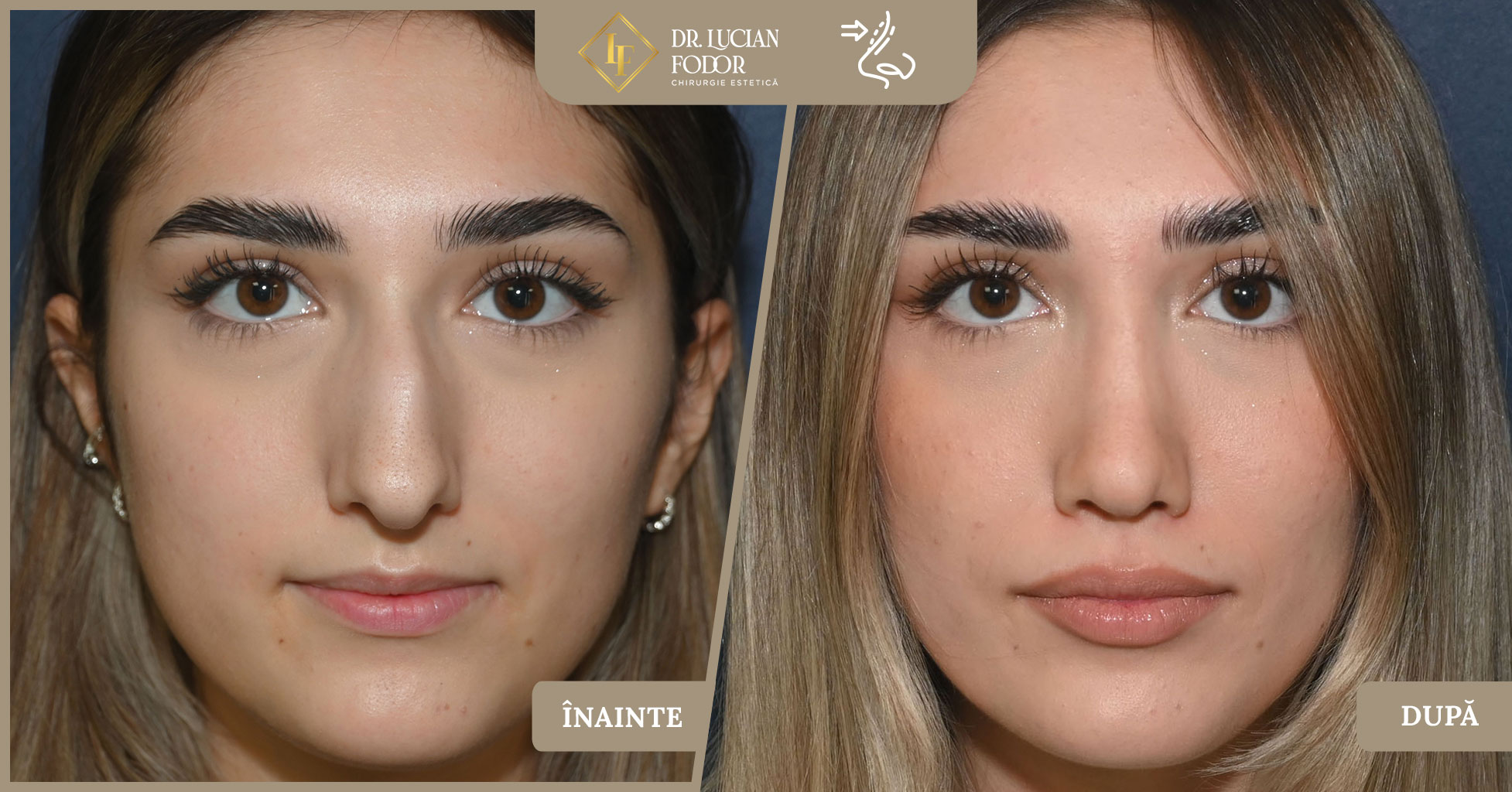
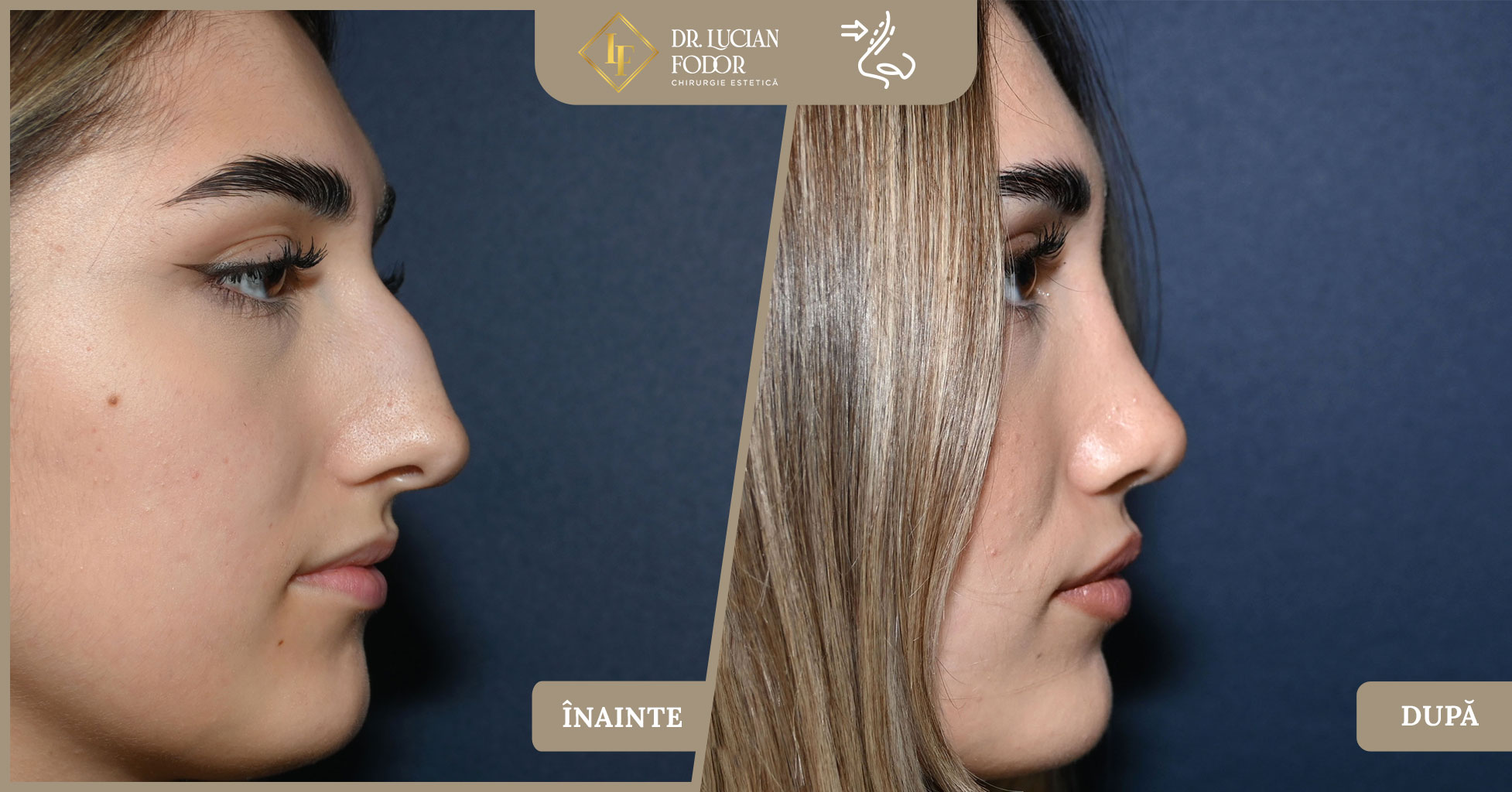
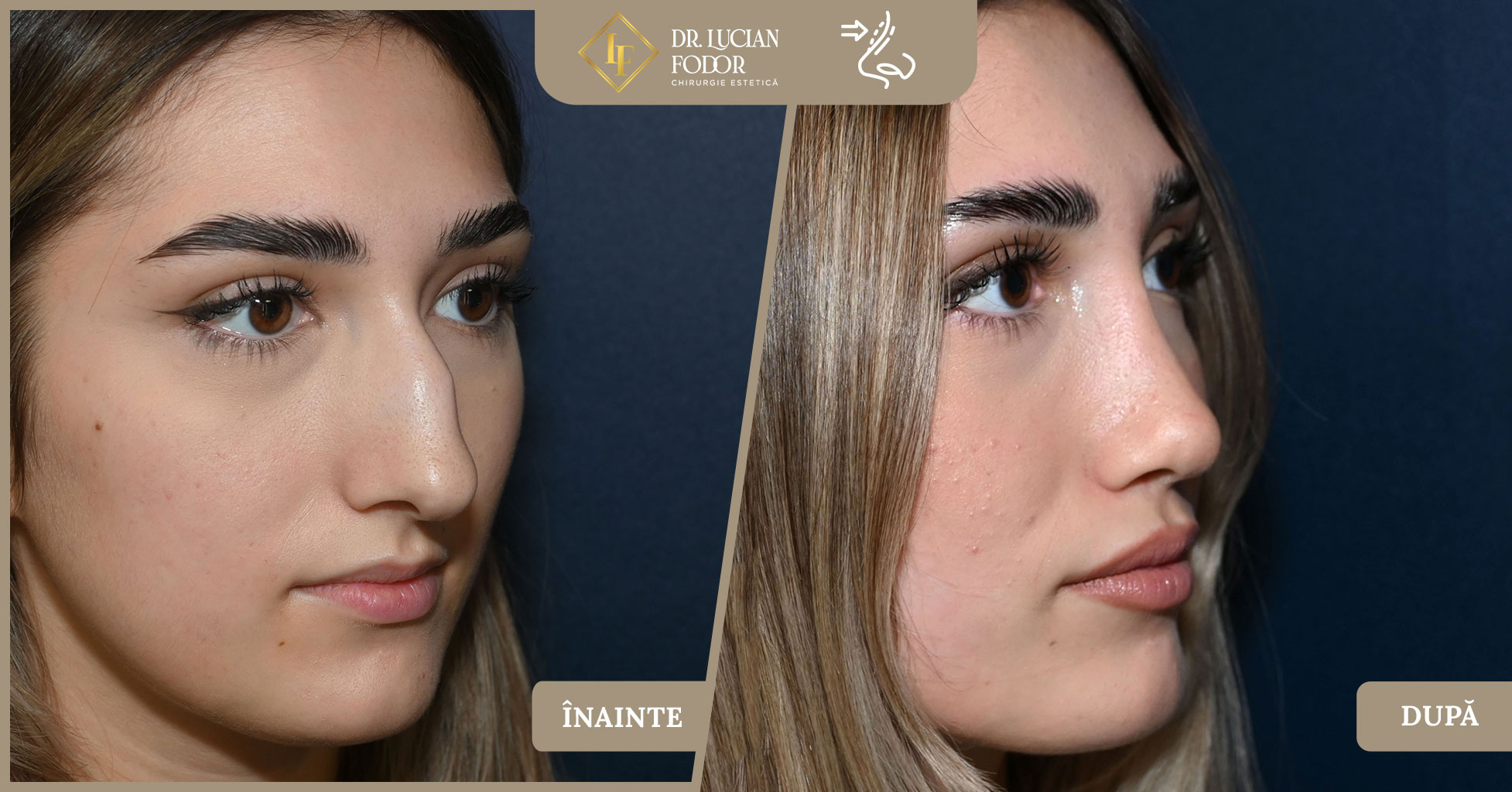
The patient came in wanting to correct more than a cosmetic concern — the nose had become a persistent visual preoccupation, perceived as the dominant and unbalancing feature of her face. On examination, the anatomical profile of the nose was marked by several overlapping structural problems: a deviation of the nasal pyramid to the left, visible both from the front and in three-quarter view; a prominent dorsal hump that breaks the straight line of the profile; and a drooping tip that further accentuated the apparent length of the nose and worsened the projection of the hump. The combination of these elements created a nose that was not only aesthetically imbalanced but also structurally deviated — requiring a comprehensive surgical approach, not a partial correction.
The Treatment Decision
Addressing the hump or tip in isolation, without correcting the deviation, would have produced an incomplete result and potentially accentuated the existing facial imbalance. Surgical planning had to integrate all three components — straightening the nasal axis, reducing the hump, and elevating the tip — into a single coherent procedure with a predictable and natural outcome.
The closed technique was deliberately chosen: it preserves the structural integrity of the nose, leaves no visible scars, and in well-selected cases, offers faster and more comfortable recovery compared to the open approach.
Surgical Technique
The procedure was performed exclusively through intranasal incisions (closed rhinoseptoplasty), with no external scar. Three components were addressed simultaneously:
- Straightening the nasal pyramid: correction of the deviation was achieved through interventions at the level of the nasal bone and septum, restoring the midline axis of the nose and symmetry as seen from the front.
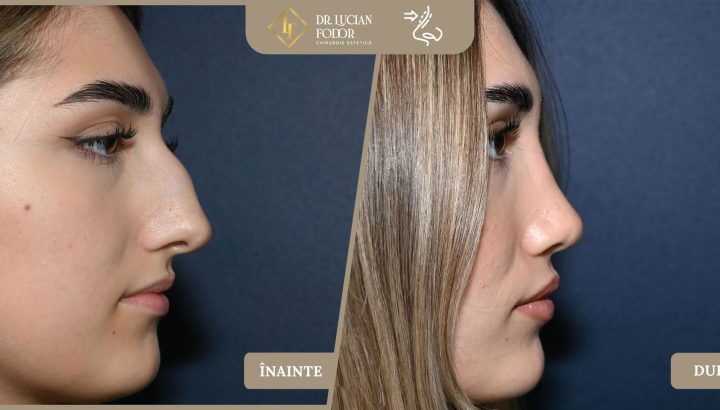
- Reduction of the dorsal hump: the profile hump was reduced through controlled intervention at the level of the nasal bridge, creating a straight and harmonious profile line.
- Correction of the drooping tip: the nasal tip was repositioned upward, proportioning the length of the nose and improving the relationship between the tip and the nasal base.
- Septal straightening and stabilization with cartilage grafts
Result
The nose now has a straight, symmetrical axis with no visible deviation. The profile is clean, without a hump, and the tip is correctly positioned — neither over-projected nor drooping. The change is significant, but the result does not follow a standard template; the nose looks natural and proportional to the patient’s features. No external scars, no operated appearance.