How the Patient Presented
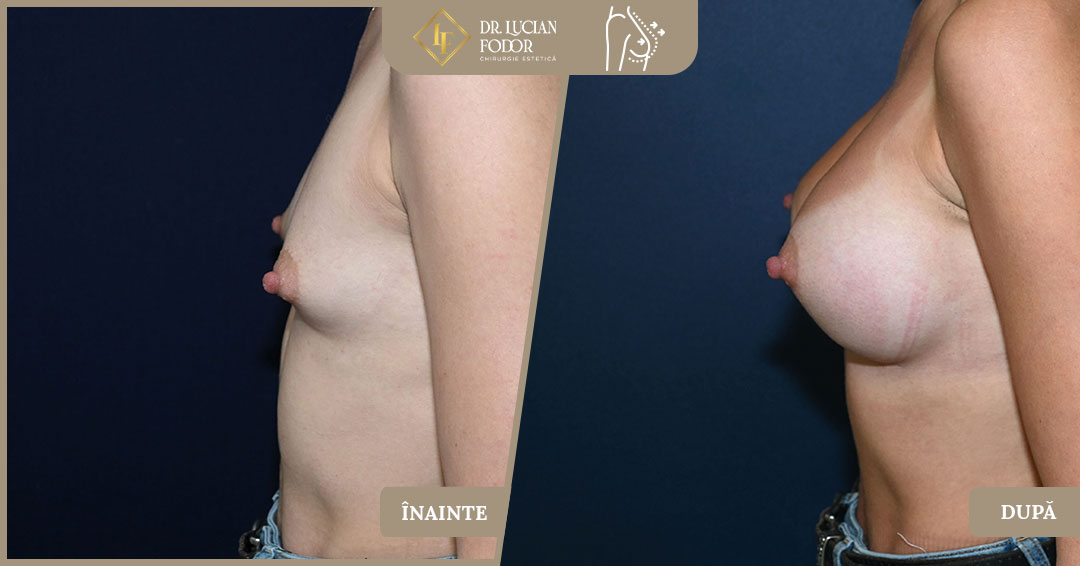
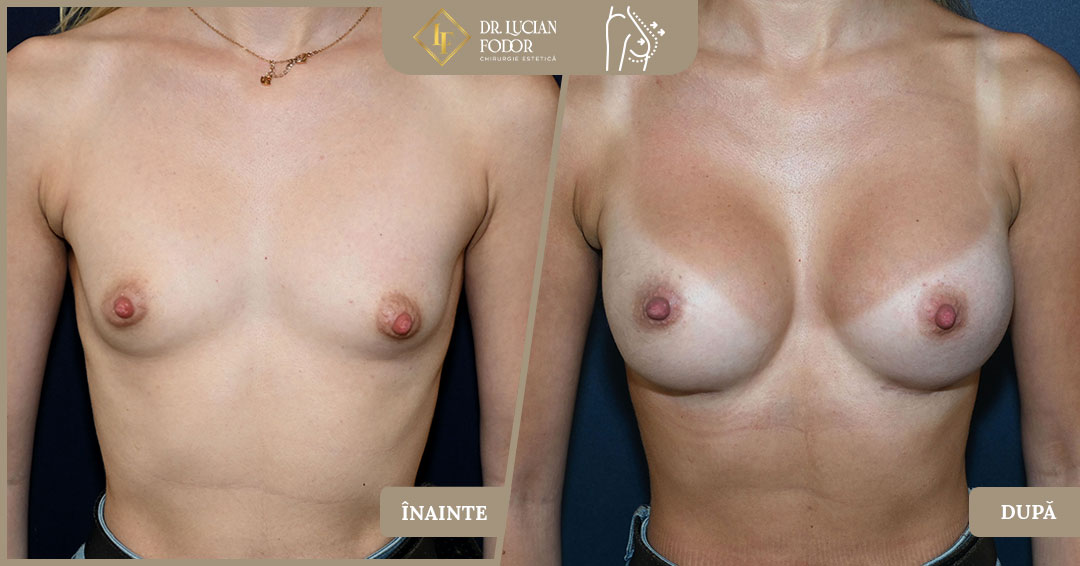
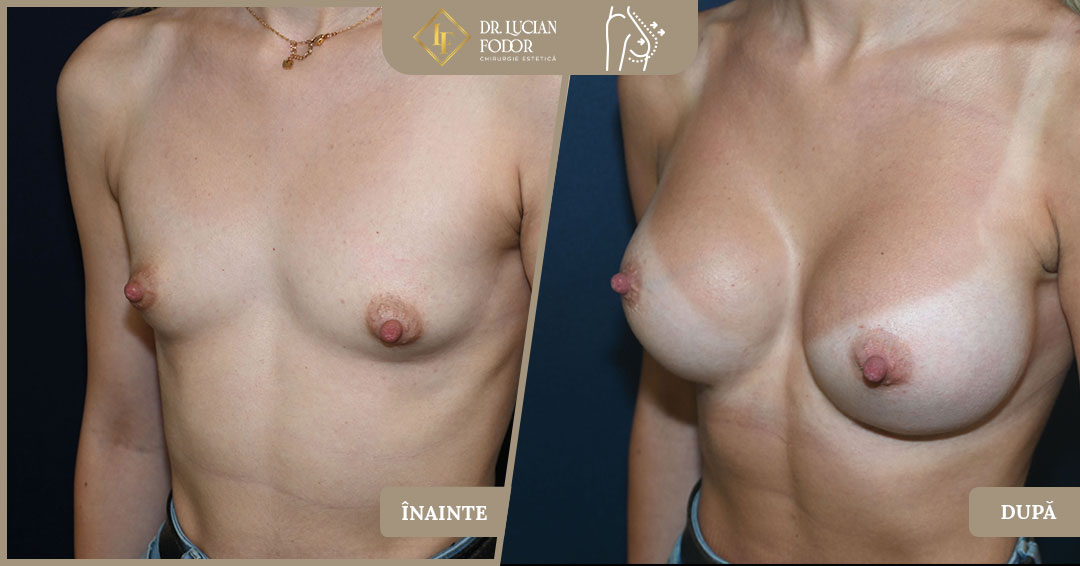
The patient came in wishing to correct the appearance of her breasts, which she perceived as disproportionately small relative to her figure. On clinical examination, the situation was more complex than straightforward mammary hypoplasia (small breasts): the ribcage had a distinctive shape — wide in the upper portion and narrow in the lower — which directly influenced how the breasts projected and distributed across the chest wall. Moreover, the volume deficit was predominantly located in the lower and outer portions of the breasts, precisely where the chest narrowing was most pronounced, creating an unbalanced appearance and a lack of fullness in the quadrants that most define the natural shape of the bust.
The Treatment Decision
A standard breast augmentation, with implant selection based solely on the desired volume, would not have optimally addressed the relationship between chest shape and volume distribution. Planning had to account simultaneously for several factors: the volume deficit concentrated in the lower and outer regions, the geometric particularities of the ribcage, and the need for a symmetrical, harmonious result adapted to the patient’s body — not simply larger in volume.
The decision was to use smooth Mentor implants, selected and positioned to compensate for the chest deformity, add necessary volume in the deficient areas, and create a natural, proportional breast contour.
Surgical Technique for Mammary Hypoplasia
The procedure involved inserting smooth Mentor breast implants through an approach that optimized both the incision location and the implant placement under the muscle, taking into account the specific chest morphology. The precise positioning of the implants was designed to correct the chest shape and fill the volume deficit in the lower and outer quadrants, ensuring balanced projection and a natural décolletage.
Smooth implants were specifically chosen to allow natural accommodation to the chest shape, promoting a soft feel and natural mobility over time.
Result
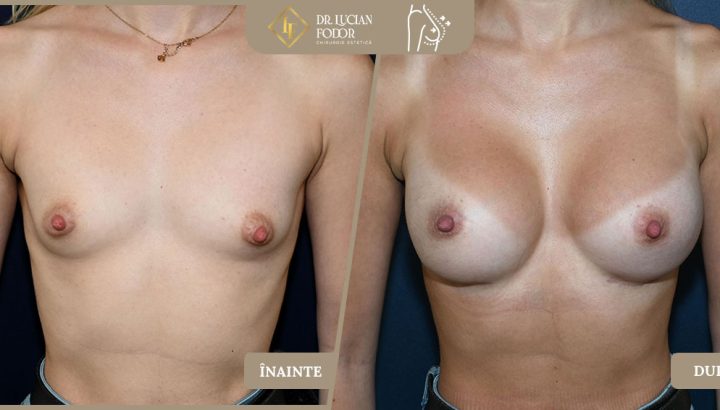
The bust now presents a balanced volume with a natural shape and harmonious transition between the chest and the breasts. The deficit in the lower and outer quadrants has been corrected, and the asymmetry generated by the particular shape of the ribcage has been effectively compensated. The result is proportional to the patient’s figure — natural, feminine, and in harmony with her overall morphology.